Your Door Will Not Lock Without a Shove? That Is Usually Not the Lock
A deadbolt that fights you every time is almost always a door alignment problem in disguise, and it is worth ruling out before anyone touches the lock.
September 9, 2026 · 3 min read
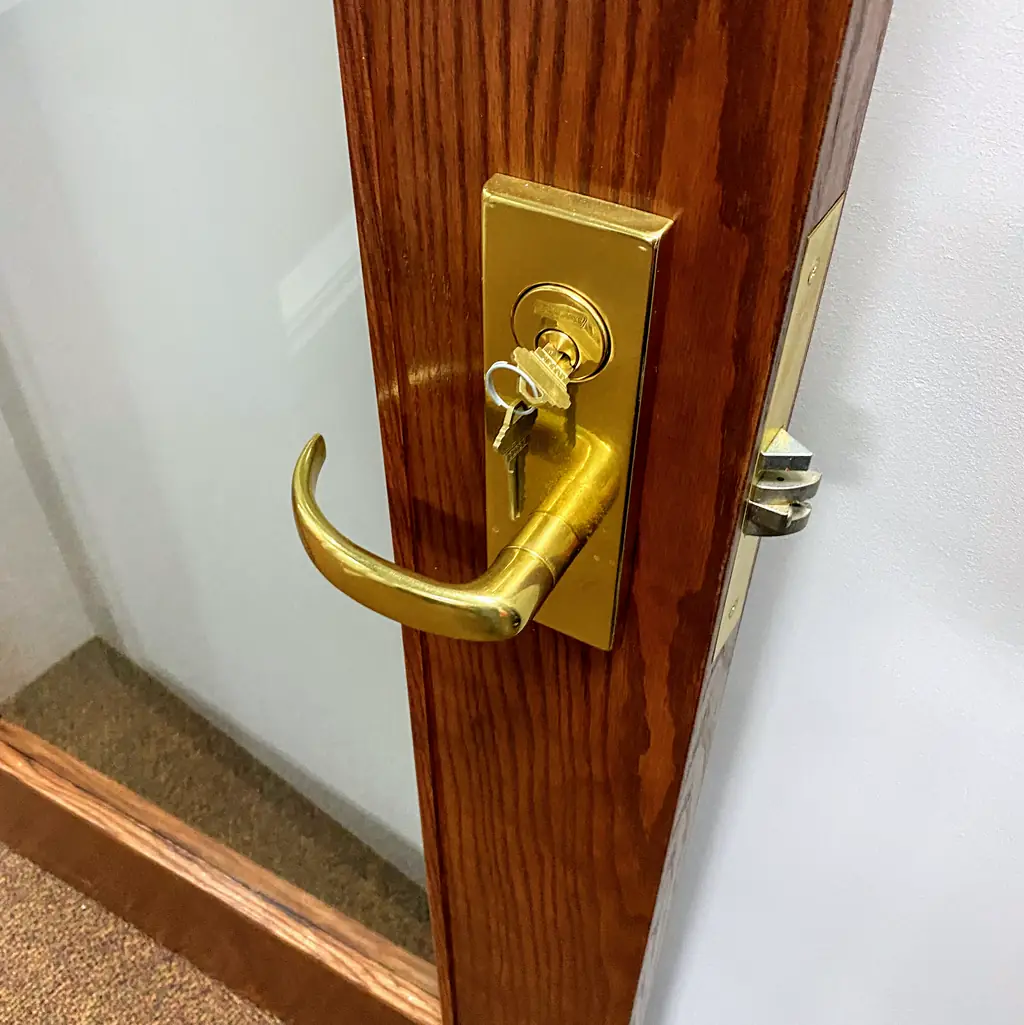
A deadbolt that needs a shoulder against the door before it will throw feels like a lock problem, and almost every homeowner's first move is to blame the lock itself. Most of the time that is the wrong diagnosis. The lock is a precise piece of hardware doing exactly what it was built to do, lining up a bolt with a hole. When that alignment is off by even a little, the lock fights you every single time, and no amount of jiggling the key fixes a door problem.
Doors move even when nothing is actually broken
Wood doors and frames swell and shrink with the seasons in Pawtucket, expanding in humid summer months and pulling back in dry winter heat. A door that latched perfectly in April can bind in August, then loosen up again by November, all without anyone touching the hardware. Houses also settle over years, shifting a frame just enough that a bolt which used to land dead center now catches the edge of its hole instead.
The strike plate is doing most of the real work
The strike plate, the metal piece mounted on the frame with the hole the bolt slides into, is the part that actually has to line up. If the door has shifted even a sixteenth of an inch, the bolt hits the edge of the plate instead of sliding through it, and that is exactly the resistance that makes people push the door closed before turning the key. Adjusting or slightly enlarging that opening, or moving the plate itself, often solves what looks like a failing lock in a few minutes.
Loose hinge screws move a door before anything else fails
Hinges take the full weight of a door every time it opens and closes, and the screws holding them into the frame back out slowly over years, especially on an exterior door that gets used several times a day. A door that has dropped even slightly on its hinges throws off the alignment between the bolt and the strike plate the same way seasonal swelling does. Tightening or replacing hinge screws is one of the cheapest fixes there is for a door that will not lock cleanly.
It is not always the exterior door
The same alignment problem shows up on interior doors, garage entry doors, and patio doors, anywhere a bolt has to meet a strike plate precisely. A door that used to close with one push and now needs to be lifted slightly by the handle first is telling you the same thing an exterior deadbolt does: something shifted, and the fix is almost always at the frame, not inside the lock. Peephole installation and door closer adjustments often get checked at the same visit, since a door that has settled enough to bind a deadbolt has usually settled enough to throw off other hardware mounted on it too.
Pawtucket sees a real swing between summer humidity and winter cold, which is exactly the range that moves a wood door enough to matter. A lock that only misbehaves for a few weeks in August or a few weeks in January, then goes back to normal, is telling you it is weather, not the hardware. That pattern alone is often enough to skip replacing a lock that never needed to be replaced.
When it actually is the lock
None of this rules out the lock. Pins wear down, springs weaken, and a deadbolt that has been forced or pried at can be bent just enough to bind even in a perfectly aligned door. The tell is usually that a hardware problem shows up the same way every time, in every season, while an alignment problem gets better and worse with the weather or comes and goes as the door settles.
What actually gets checked
- Whether the bolt lines up with the strike plate opening
- Whether the hinge screws are tight and the door hangs level
- Whether the binding changes with humidity or time of year
- Whether the lock itself turns freely with the door held open
Most of this gets sorted out at the door in one visit, since door alignment work does not usually require replacing the lock at all. A Better Locksmith checks all of this as part of an ordinary residential call in Pawtucket, from either counter, on (401) 475-8007. Describe when it started fighting you and whether it is worse in any particular season, and that alone usually points to the answer before anyone shows up.
A Better Locksmith, (401) 475-8007
Call (401) 475-8007More articles
Locked Out in Pawtucket? Here's What to Do First
Key inside, key broken, or the lock itself gone bad: the three real kinds of lockout, and the mistakes that turn a small job into a hardware bill.
You Just Got the Keys to a New House. Here's Why Re-Keying Beats New Locks
Moving in means someone else might still have a key. Re-keying puts the locks back under your control without replacing hardware that already works.