Re-keying
Re-keying, from one house key to a whole building.
One key for every door you own, or a master system for a building with many. Same shop, often the same afternoon.
Chapter 01
Changing the key is not the same as changing the lock
Re-keying and replacing are two different jobs, and most people who call asking for the second one actually need the first. Re-pinning swaps the pins inside the cylinder so it answers to a new key, and the lock itself, the deadbolt, the whole assembly, stays exactly where it is on the door. Nothing gets torn out. Sound hardware has no reason to come off a door just because the key needs to change.
New hardware is the right call in narrower cases: a cylinder worn enough that keys stick or slip, a housing that has been damaged or forced, or a lock that was never rated for the door it sits on in the first place. Otherwise, re-keying is the cheaper, faster, and correct answer, and the shop will say so plainly before any work starts rather than after.
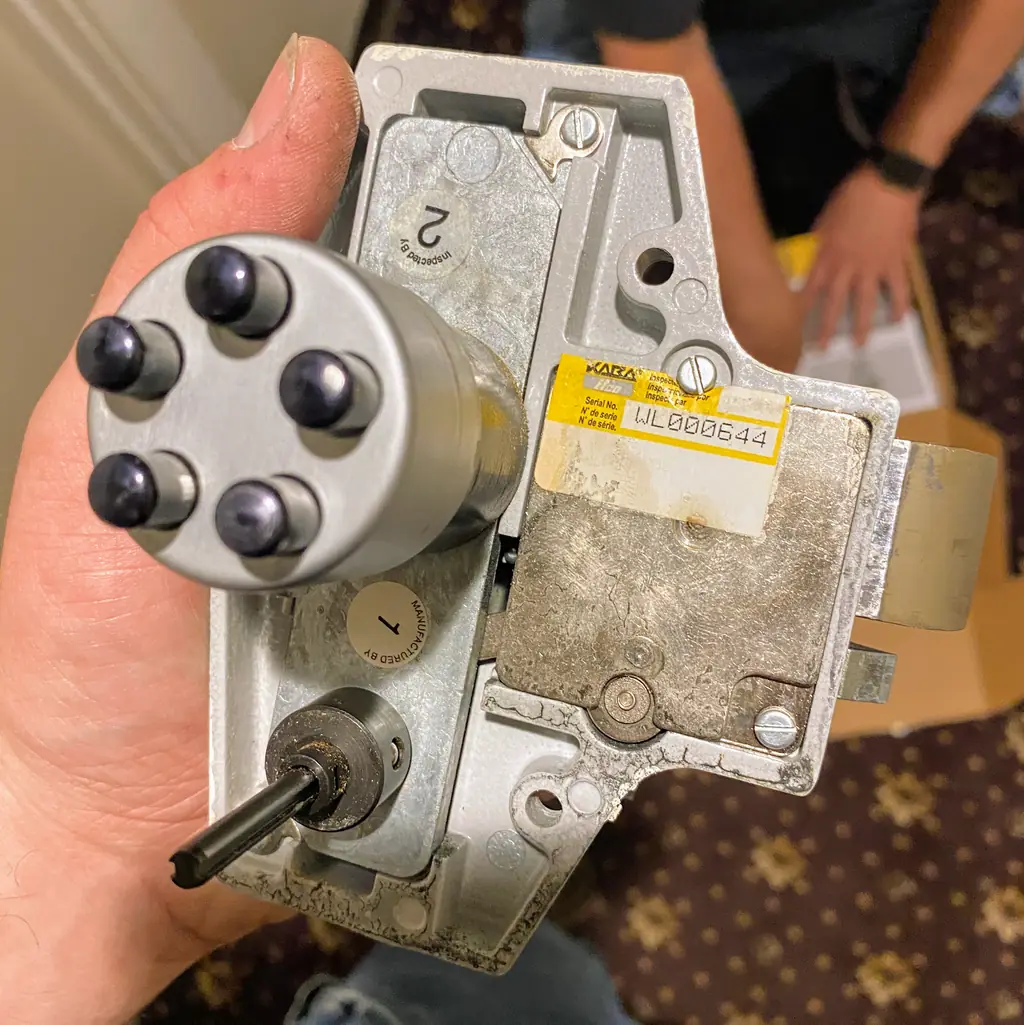
Kaba interchangeable core lock cylinder held in hand
One key for the whole house
Most calls that start as one lock turn into several, because a house rarely has just one door worth locking. The front door, the back door, a side entry, the garage door lock, even the mail box lock, all of it can be re-keyed to a single key, turning a ring heavy with mismatched keys into one that opens everything you actually use.
Jeff Cormier's job is what this looks like at full scale. Several lock sets got re-keyed in one visit, plus a few deadbolts added while the technician was already there. That is the normal shape of the work, not the exception, one visit that leaves every door in the house on the same key, done in an afternoon rather than spread across a week of separate appointments.
Chapter 03
Moving in, tenants, and foreclosures
The week you get the keys to a new place is the week to re-key it, because there is no honest way to know how many copies exist of the set you were handed. Past tenants, past contractors, and a real estate agent's lockbox are all unknowns until the cylinders themselves are changed.
The shop does this routinely for real estate agents and for bank foreclosures, where a property changes hands with no reliable key history at all. Restricted key systems solve a related problem for anyone who wants control going forward: keys that cannot simply be duplicated at a hardware store counter without authorization from the shop that issued them.
Master keying, and what it is for
A master key system lets one key open every door in a building while separate keys open only the doors they are supposed to. It is the difference between handing a property manager one key and handing a cleaning crew a dozen keys that only work where they need to, an ordinary need for landlords, small offices, and anyone managing more doors than they want to carry keys for.
On homes, the shop keys to Schlage, Kwikset, and Arrow hardware. On commercial doors, the same master and restricted systems run on Best, Schlage, and Arrow interchangeable cores, which is what lets a building's keying get updated core by core without pulling hardware off doors. That distinction, cores that swap out instead of full cylinder replacement, is what makes re-keying an entire office fast rather than a weekend project.
A Better Locksmith. Bonded and insured. Call (401) 475-8007.